

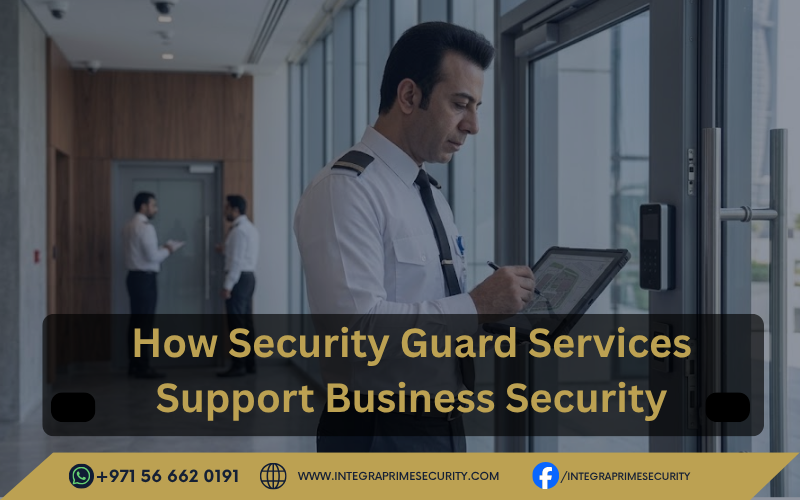
Businesses operate in environments where people, property, equipment, information and day-to-day operations all need to be considered from a security perspective. Offices, warehouses, retail premises, construction sites and commercial buildings can each have different access points, operating patterns and potential vulnerabilities.
For organisations researching professional security guard services dubai, it is important to understand what physical security personnel actually contribute. A security officer can provide a visible presence, monitor designated areas, support access-control procedures, conduct patrols and report concerns according to agreed site instructions.
Security guarding is not simply about standing at an entrance. Depending on the assignment, officers may interact with employees, visitors and contractors, monitor entrances and exits, check specific areas, maintain security records and respond to incidents within their authorised responsibilities.
In Dubai’s diverse commercial environment, security requirements can vary considerably between a corporate office, retail property, warehouse, hotel, construction site or residential development. Understanding these differences helps businesses consider whether physical security should form part of their wider security strategy.
Security guard services involve security personnel carrying out defined duties to help protect people, property, premises and business operations.
The responsibilities of a security officer depend on the assignment. A guard working at a corporate reception may have a very different role from an officer protecting a construction site or conducting patrols at an industrial facility.
Depending on the site’s requirements, duties may include:
The scope of duties should be established through the site’s security requirements, assignment instructions and risk assessment.
This distinction matters because “security guard” is a broad term. The appropriate responsibilities, equipment, patrol requirements and level of supervision can differ substantially from one business environment to another.
Technology can provide valuable security information, but businesses may also benefit from having a person physically present on their premises.
A physical security presence can help address situations that require observation, interaction or an on-site response according to established procedures.
Common business security concerns can include:
The role of physical security can be understood through several connected stages:
Deterrence → Observation → Detection → Reporting → Response
A visible security officer may help deter certain unwanted behaviour. During a shift, the officer can observe the environment and identify unusual circumstances. If an issue is detected, it can be documented and reported, followed by an appropriate response according to the agreed procedures.
This does not mean security guards eliminate every security risk. Their role is to form part of a structured security arrangement designed around the risks and requirements of the specific premises.
Security officers can contribute to business security in several practical ways.
The presence of security personnel can make it clear that a property has an active physical security presence.
At a commercial entrance, for example, a visible officer may discourage some unauthorised behaviour while also providing a point of contact for employees, visitors and contractors.
Deterrence is not the same as prevention. No physical security arrangement can guarantee that an incident will not occur.
Security guards may support access control by checking credentials, confirming authorised entry or following procedures established by the organisation.
This can be particularly relevant at premises with restricted areas, multiple entrances or different categories of employees, contractors and visitors.
At offices, commercial buildings and residential developments, security personnel may support visitor procedures.
Depending on the assignment, this could involve recording visitor information, confirming the purpose of a visit, directing visitors to the appropriate area or notifying the relevant employee that someone has arrived.
Patrols allow officers to physically observe designated parts of a property.
During a patrol, an officer may identify an unsecured door, unusual activity, damaged fencing, a lighting issue or another condition that requires attention.
Patrols can therefore extend security observation beyond a single reception desk or entrance.
Accurate reporting is an important part of security operations.
An officer may record what happened, when it was observed, where it occurred and what action was taken under the applicable procedure. Clear documentation can help management understand security issues and identify recurring vulnerabilities.
When an incident occurs, security personnel can follow the agreed escalation process.
The appropriate response depends on the nature of the incident, the assignment instructions and the authority given to the officer. This is why clear procedures are important before an incident takes place.
A person physically present at a property can observe circumstances that may be difficult to interpret through technology alone.
An officer can notice changes in visitor behaviour, unusual activity around an entrance, physical damage or other environmental factors and report them according to the site’s procedures.
Security guarding duties should be tailored to the property rather than assumed to be identical across every assignment.
Potential responsibilities can include:
The precise scope can depend on the site’s requirements, client instructions, risk assessment and operating environment.
For example, a security officer at a warehouse may spend significant time managing vehicle and delivery access, while an office-based assignment may place greater emphasis on reception security and visitor management.
Similarly, construction-site security may focus more heavily on perimeter observation, access control and protection of equipment and materials.
Different businesses can have very different physical security requirements, which is why security planning should begin with the property and its actual risks rather than a standard guarding model. Businesses in Dubai Need Professional Security Guards may include corporate offices, retail stores, warehouses, construction sites, industrial premises, hotels and residential developments, but the appropriate level of guarding will depend on factors such as access arrangements, operating hours, visitor activity, assets, site layout and identified vulnerabilities.
For example, a large commercial building with multiple entrances may require a different arrangement from a small office with a single controlled entrance. A construction site can also have changing security requirements as new equipment, materials, temporary structures and contractors are introduced.
The key consideration is therefore not simply the type of business. It is how the business operates and what security risks need to be managed.
Access control is one of the most visible functions of physical security. A professional security company Dubai can provide trained security officers to help businesses manage access in line with site-specific procedures and operational requirements.
Businesses may need to manage access for different groups, including:
A security officer may monitor designated entrances and follow the site’s procedures for checking identification, credentials or visitor information.
For example, a warehouse may have separate pedestrian and vehicle entrances, while an office building may have a reception area with visitor registration. A construction site may require contractors and delivery vehicles to follow specific access procedures.
Effective access control can help a business maintain greater awareness of who is entering and leaving designated areas.
However, guards should operate according to authorised site instructions. They do not automatically determine a person’s legal rights to access property; their role is to apply the access procedures established for the assignment.
Different commercial environments create different security considerations.
Corporate offices may benefit from security personnel supporting reception, visitor management, access control and after-hours monitoring.
An officer can help direct visitors, monitor entrances and report unusual activity while allowing employees to follow established access procedures.
Retail businesses may use security personnel as a visible presence within or around customer-facing premises.
Depending on the assignment, officers can observe activity, support customer safety, monitor entrances and exits and report suspected theft, disputes or other incidents according to established procedures.
Warehouses can have large perimeters, multiple entrances, delivery areas and valuable stock.
Security officers may support access control, monitor deliveries, conduct perimeter patrols and report concerns involving doors, gates or restricted areas.
Construction sites can change significantly throughout a project.
Equipment, tools and materials may be brought onto the site as work progresses. Security personnel may therefore support controlled access, monitor the perimeter and conduct patrols during agreed periods.
Industrial facilities may include restricted areas, specialist equipment, vehicle movements and multiple access points.
Security guarding can support controlled entry, patrols, observation of designated areas and incident reporting.
Security personnel may support entrance control, visitor management and observation of shared areas.
The appropriate duties depend on the development’s layout, residents, visitors, contractors and agreed security procedures.
Hotels and other hospitality properties have a strong focus on people, entrances and visitor activity.
Security officers may support guest-facing security, monitor entrances, observe common areas and report incidents while working alongside the property’s operational teams.
Security personnel and technology can provide complementary forms of security coverage.
CCTV cameras can provide visual information from selected areas, while remote CCTV monitoring can allow designated personnel to assess activity away from the physical site.
A security officer, meanwhile, provides a physical presence and can carry out authorised actions on the premises.
Other technologies may include:
The relationship can be particularly useful when technology identifies something that requires physical observation.
For example, a CCTV system may show activity around an entrance, while a security officer on site can observe the area directly and follow the applicable reporting or escalation procedure.
The principle is straightforward:
Technology provides visibility and information, while security personnel provide a physical presence and can follow agreed procedures on site.
Neither approach is automatically suitable for every business. The right combination depends on the property’s risk profile and operational requirements.
Security guards and CCTV monitoring serve different functions. Comparing them can help businesses understand where each approach may fit.
| Security consideration | Security Guards | CCTV Monitoring |
| Physical presence | A security officer is physically present at the premises. | Monitoring takes place remotely. |
| Access control | Officers can follow authorised access procedures and interact with people entering the site. | CCTV can observe entrances but does not physically control access by itself. |
| Human observation | Officers can observe the surrounding environment directly. | Operators can assess activity visible through cameras. |
| Remote visibility | Physical officers need to attend the relevant area. | Cameras can provide remote visibility of covered locations. |
| Patrol capability | Officers can conduct physical patrols around designated areas. | Cameras monitor fixed viewpoints rather than physically patrolling. |
| Recorded footage | Officers can create written patrol and incident records. | CCTV may provide recorded footage where the system is configured for recording. |
| Visitor interaction | Officers can communicate directly with visitors and contractors. | Cameras provide observation but generally do not replace direct interaction. |
| Incident reporting | Officers can record observations and follow on-site reporting procedures. | Monitoring personnel can identify and report activity according to the monitoring process. |
| Best used as | Physical presence, access support, patrols and on-site observation. | Remote observation and visual monitoring of selected areas. |
In many business environments, the question is not whether to choose guards or CCTV exclusively. A combination may provide broader coverage when the business’s risk assessment supports it.
The need for physical guarding should be considered in relation to the specific risks and operating environment of the business.
Factors that may justify evaluating a physical security presence include:
These factors do not automatically mean a business must employ security guards. Instead, they can indicate areas that deserve closer assessment.
For example, a business with valuable equipment but very limited public access may have different requirements from a busy commercial building with numerous visitors throughout the day.
Businesses should define their security requirements before deciding what type of guarding arrangement is appropriate.
A useful starting checklist includes:
Identify the main threats, vulnerable areas and potential consequences of a security incident.
Consider the number of buildings, entrances, floors, perimeter areas and restricted zones that require attention.
Determine when physical security is required and whether requirements change between daytime and after-hours operations.
Clearly define whether the assignment involves access control, visitor management, patrols, CCTV observation, reporting or other functions.
Establish which areas should be patrolled and how patrol observations should be documented.
Determine how employees, contractors, visitors and delivery personnel should be managed.
Define what information should be recorded and who should receive reports.
Establish what officers should do when they identify an incident or security concern.
Consider how guards will work alongside CCTV, access control, alarms and other systems.
Identify the people responsible for receiving security reports and handling relevant operational decisions.
Security requirements can change as businesses expand, relocate, change operating hours or alter their premises.
A clearly defined scope helps ensure that security personnel understand what is expected of them and allows the business to evaluate whether the arrangement remains appropriate over time.
Effective business security is broader than simply placing a guard at a doorway.
A structured approach can be viewed as:
Risk Assessment → Security Planning → Guarding → Technology → Monitoring → Reporting → Review
The risk assessment identifies vulnerabilities. Security planning determines what measures may address them. Security personnel provide physical presence and perform defined duties, while technology can provide additional monitoring and information.
Reporting then creates a record of incidents and observations, allowing management to identify recurring issues or changes in risk.
The final stage is review. Security arrangements should not necessarily remain unchanged indefinitely.
A business may need to reconsider its security strategy when:
This risk-based approach can help businesses avoid treating security as a static requirement.
Security guarding can include duties such as access control, visitor management, patrols, security observation, incident reporting and monitoring designated areas. The exact responsibilities depend on the site’s requirements and assignment instructions.
Security officers can provide a visible presence, monitor designated areas, support access-control procedures, conduct patrols, identify unusual activity and report incidents. These functions can contribute to a wider physical security strategy.
A typical shift depends on the assignment. An officer may monitor an entrance, manage visitors, conduct patrols, check designated areas, maintain security records and report incidents or concerns according to site procedures.
They can support access control by applying authorised site procedures. This may include checking credentials, managing visitor access or monitoring entrances and exits, depending on the assignment.
Yes. CCTV can provide remote visual information, while security officers provide a physical presence and can follow agreed procedures on site. Combining both can provide complementary security coverage.
A wide range of organisations may consider physical guarding, including offices, retail premises, warehouses, construction sites, industrial facilities, hotels, residential developments and mixed-use properties.
A business may consider it when factors such as valuable assets, multiple access points, high visitor activity, after-hours operations, previous incidents or a need for visible physical security make guarding relevant to its risk profile.
Start with a risk assessment of the premises, access points, assets, operating patterns and existing security measures. The business can then define the duties, coverage and technology integration required to address identified risks.
How can we help you?
WhatsApp us