

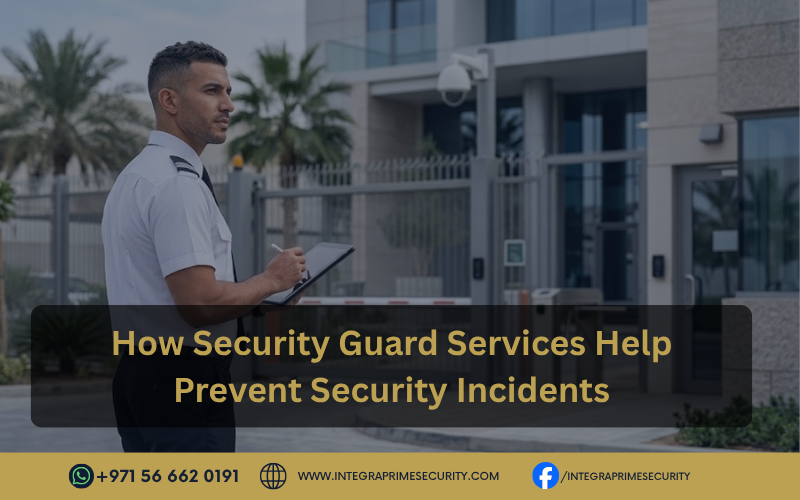
Security incidents can disrupt businesses, threaten people, damage property and create significant financial losses. From unauthorised access and theft to vandalism, workplace disturbances and emergencies, organisations in Dubai face a wide range of security challenges that require proactive protection.
While CCTV cameras, alarms and access control systems can play an important role, technology alone cannot physically intervene when a security incident occurs. Trained security personnel provide a visible presence, monitor activity, identify potential risks and respond to situations as they develop.
Security Guarding Services in Dubai can therefore form an important part of a comprehensive security strategy for businesses, residential communities, construction sites, retail premises, warehouses, offices, commercial buildings and other properties.
But how exactly do security guards help prevent incidents before they escalate?
The primary role of a security guard is not simply to react after an incident has occurred. Effective security guarding focuses heavily on prevention, deterrence, observation and early intervention.
A professional security officer can monitor people and activities, control access, conduct patrols, identify unusual behaviour and follow established procedures when a potential threat is detected.
This human presence can make a significant difference because security personnel can assess situations in real time and take appropriate action within their responsibilities.
For businesses considering different types of protection, understanding What Are Security Guard Services and How Do They Work can provide useful background on how manned guarding fits into a wider security strategy.
One of the most immediate benefits of security guards is their visible presence.
A uniformed security officer at a building entrance, reception area, retail premises, residential development or construction site sends a clear message that the property is actively monitored.
Potential offenders may be less likely to attempt theft, vandalism, trespassing or unauthorised access when they know trained personnel are present.
This is known as security deterrence.
Although no security measure can guarantee that criminal activity will never occur, visible guarding can reduce opportunities by increasing the perceived likelihood of detection and intervention.
Unauthorised access is a common security concern for commercial and residential properties.
Security officers can help manage who enters and leaves a site by following the property’s access control procedures.
Depending on the assignment, responsibilities may include:
Effective access control is particularly important for offices, warehouses, construction sites, residential communities and industrial facilities.
By identifying unusual access attempts at an early stage, security personnel can help prevent minor concerns from becoming more serious incidents.
Patrolling allows security officers to inspect different areas of a property rather than remaining in one location throughout their shift.
Depending on the site’s requirements, patrols may cover:
During a patrol, an officer may identify an unlocked door, damaged fencing, suspicious activity, an unfamiliar vehicle, a safety hazard or signs of attempted intrusion.
Early identification is important because a vulnerability that appears minor can potentially lead to a larger security incident if it is ignored.
Technology can record activity, but a trained security officer can observe behaviour and make decisions based on what is happening in front of them.
Security personnel may notice unusual patterns such as:
Security officers can then follow the property’s established procedures, report concerns and escalate incidents when appropriate.
This human observation can complement CCTV surveillance and other electronic security systems.
One of the key advantages of manned guarding is having trained personnel physically present at the property.
If an alarm activates, a disturbance occurs or suspicious activity is detected, an on-site security officer can assess the situation and take appropriate action within their training and authority.
This can include:
The exact response depends on the site, assignment instructions, legal responsibilities and nature of the incident.
Having personnel already on-site can also reduce the delay associated with identifying a problem remotely and then arranging a physical response.
Security is not only about protecting buildings and physical assets.
Businesses also have a responsibility to provide a safe environment for employees, customers, contractors and visitors.
Security officers can help manage situations involving:
In customer-facing environments such as retail stores, hotels and commercial buildings, professional security personnel can also provide reassurance and support to staff and visitors.
Businesses may hold significant physical assets within their premises.
These can include equipment, stock, machinery, vehicles, electronics, building materials and confidential business property.
Warehouses, construction sites, retail stores and industrial premises may be particularly vulnerable to theft because valuable items can be stored across large areas.
Security officers can help protect these assets by monitoring access points, conducting patrols, checking deliveries and identifying suspicious activity.
A security plan can also establish specific areas or assets that require additional attention based on the property’s risk profile.
Security guards and technology should not necessarily be viewed as competing security solutions.
They can work together.
CCTV systems provide visual surveillance, while security officers can monitor activity, investigate alerts and respond to situations on-site.
For example, a camera may identify unusual movement in a restricted area. A security officer can then investigate the situation and follow the property’s response procedures.
This combination of human security and electronic surveillance can provide multiple layers of protection.
Technology can help detect and record activity, while trained personnel can provide physical presence, situational awareness and appropriate response.
Vandalism can result in repair costs, operational disruption and reputational damage.
Properties that appear poorly monitored may be more vulnerable to graffiti, criminal damage and unauthorised access.
Regular patrols and visible guarding can act as a deterrent while allowing damage or attempted intrusion to be identified quickly.
This is particularly relevant for:
Preventing damage can often be more cost-effective than dealing with the consequences after an incident has occurred.
Certain environments experience higher levels of activity at particular times.
Retail premises may become busy during peak shopping periods, offices may have large numbers of visitors during events, and construction sites may have multiple contractors arriving and leaving throughout the day.
Security personnel can help manage movement around the site and ensure established procedures are followed.
Their presence can help reduce confusion, improve access management and identify potential problems before they develop into larger incidents.
Security officers can also contribute to emergency preparedness and response.
Depending on their training and assignment, they may help implement procedures relating to situations such as:
The security officer’s responsibilities should be clearly defined within the property’s emergency and security procedures.
Clear communication between security personnel, management, emergency services and other responsible parties is essential during serious incidents.
Professional security is not only about preventing incidents in real time. Accurate reporting can also help businesses understand their security environment.
Security officers may record:
Over time, these records can help identify patterns.
For example, repeated access attempts at a particular entrance or recurring incidents during specific hours may indicate that additional security measures are required.
This information can contribute to future security risk assessments and help organisations improve their security procedures.
Different properties have different risks, which means security guarding should be tailored to the environment.
Offices and commercial buildings may require reception security, visitor management, access control, patrols and protection of employees and business assets.
Retail security can focus on theft prevention, customer and staff safety, access management, monitoring and incident response.
Construction sites can contain valuable equipment, tools, machinery and materials. Security officers can help control access and monitor the perimeter to reduce theft and trespassing risks.
Large facilities may require regular patrols, gatehouse security, delivery monitoring, perimeter checks and controlled access to restricted areas.
Residential security can help manage visitor access, monitor communal areas, patrol the premises and provide a visible security presence for residents.
Hotels may require a combination of guest safety, access management, patrols, incident response and support for staff and visitors.
Not every property requires the same level of guarding.
The appropriate security solution depends on factors such as:
A security risk assessment can help identify vulnerabilities and determine where security officers can provide the greatest value.
For example, a warehouse with a large perimeter may require regular external patrols, while a corporate office may place greater emphasis on reception security and access control.
A strong security strategy often uses multiple layers rather than relying on one measure.
Security guards can work alongside:
This layered approach can make it more difficult for unauthorised individuals to exploit a single security weakness.
For example, CCTV may detect unusual movement, an alarm may generate an alert, and a security officer may then investigate and follow the site’s response procedures.
The biggest advantage of professional security guarding is the ability to combine presence, observation, prevention and response.
A security officer can identify a potential problem before it develops into a serious incident, challenge unauthorised access according to established procedures, report vulnerabilities and escalate situations when necessary.
This proactive approach can help businesses move away from simply reacting to incidents after they happen.
Instead, security becomes an ongoing process of monitoring risks, maintaining controls and responding appropriately to changing circumstances.
Security incidents can happen quickly, but effective security planning can help reduce opportunities for them to occur.
Professional security guards provide more than a visible presence. Through access control, patrols, observation, deterrence, incident reporting and appropriate response, trained security personnel can become an important part of a property’s overall security strategy.
For businesses and organisations in Dubai, the right combination of manned guarding, CCTV, access control, patrols and risk-based security procedures can provide multiple layers of protection for people, property and operations.
The objective is simple: identify risks early, deter unwanted activity and respond effectively when security concerns arise.
Security guards can help deter criminal activity through their visible presence, monitor access points, conduct patrols, identify suspicious behaviour and follow established incident-response procedures. Their effectiveness depends on appropriate training, clear instructions and a security strategy suited to the property.
Security guards and CCTV serve different purposes and can work effectively together. CCTV provides surveillance and recorded footage, while security officers provide a physical presence, human observation and on-site response.
Security guarding may benefit offices, retail stores, warehouses, construction sites, industrial facilities, residential communities, hotels, commercial buildings and other properties where there are risks involving people, assets, access or premises.
Yes. Depending on their assignment and established procedures, security officers can check identification, monitor entrances, verify visitors, manage access records and prevent unauthorised individuals from entering controlled areas.
Security officers can follow site-specific emergency procedures and take appropriate action within their training and responsibilities. Depending on the incident, this may involve raising an alarm, contacting relevant emergency services, assisting with evacuation procedures or securing an affected area.
Businesses should consider their property’s vulnerabilities, operating environment, assets, access points, previous incidents and required level of protection. A professional security risk assessment can help determine the appropriate combination of guarding, surveillance, access control and other security measures.
How can we help you?
WhatsApp us