

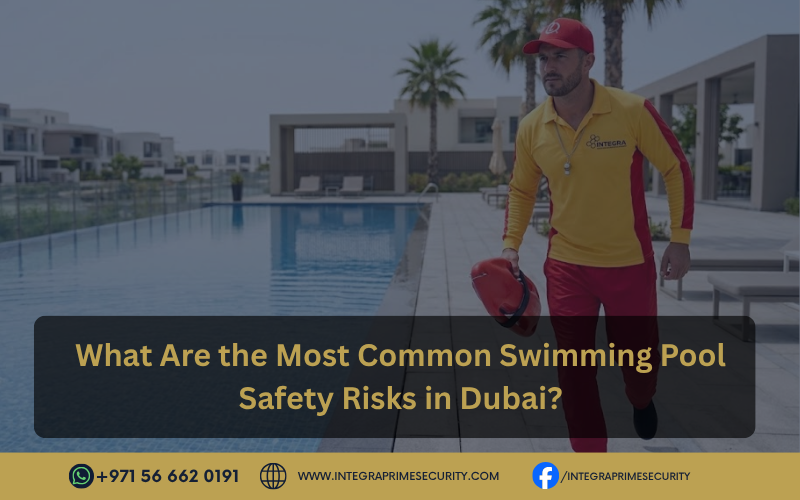
Swimming pools are a major feature of hotels, resorts, residential communities, gyms, leisure facilities and private properties across Dubai. They also require active safety management because a pool can present several hazards at the same time, particularly when children, inexperienced swimmers or large numbers of users are present.
The most common swimming pool safety risks include drowning, inadequate supervision, slips and falls, unsafe diving, inadequate separation of children and adult areas, poor access control, missing rescue equipment and delayed emergency response.
For pool owners and operators, safety is not simply about having warning signs around the water. It involves supervision, suitable equipment, clear procedures, regular maintenance and a response plan that works when an incident occurs.
Dubai’s regulatory framework also places specific responsibilities around swimming pool safety. Dubai Municipality maintains dedicated technical guidance for public and private swimming pools, while Law No. (2) of 2026 on Public Safety in Dubai, effective from 1 June 2026, includes specific requirements relating to swimming pools.
Swimming pool safety matters because an incident in or around the water can develop very quickly.
A swimmer experiencing difficulty may not always attract attention immediately. A child can enter a pool area without supervision, while an inexperienced swimmer may overestimate their ability. Slippery surfaces can also create risks before someone even enters the water.
Dubai has a wide range of swimming environments, including:
Each setting has different users, layouts and operating conditions. A busy hotel pool, for example, may need a different supervision arrangement from a private residential pool.
The key principle is that pool safety should be managed according to the environment, the users and the risks identified at the particular facility.
Drowning is the most serious risk associated with swimming pools.
The danger is not limited to people who cannot swim. Experienced swimmers can also encounter problems because of exhaustion, illness, injury, sudden distress or unexpected circumstances.
A person in difficulty may not behave like someone calling for help. This makes active observation particularly important in environments where a lifeguard is responsible for monitoring swimmers.
Supervision should therefore focus on what is actually happening in the water rather than simply having someone present beside the pool.
A lifeguard’s presence is only useful when the pool is being actively and effectively monitored.
Potential problems can arise when:
Dubai Municipality maintains a dedicated Lifeguard Scheme Requirements resource and technical guidance covering swimming pool safety.
For applicable permanent shared swimming pools, Dubai’s 2026 public safety law specifically refers to the provision of a qualified lifeguard according to requirements and standards determined by the relevant authority.
The precise requirements can vary according to the type of pool and facility, so operators should verify the current requirements applicable to their property.
Children can be particularly vulnerable around swimming pools.
A child may enter the pool area unexpectedly, move from a shallow section towards deeper water or approach the pool while adults are distracted.
Physical controls can therefore be important alongside supervision.
Depending on the facility, these may include:
Dubai’s 2026 public safety law requires permanent shared pools in specified facilities to provide a physical separation between adult and children’s pools.
The risk does not stop at the water’s edge.
Wet pool decks can become slippery, particularly when users run, splash water onto walking surfaces or fail to follow pool rules.
Falls can result in:
Pool operators should therefore consider the condition of flooring, drainage, housekeeping and the way users move around the pool.
Regular inspection can identify standing water, damaged surfaces, obstacles and other hazards before they contribute to an accident.
Diving into water that is too shallow can result in serious injury.
Jumping or diving from unauthorised locations can also create risks for other swimmers.
Clear signs can help communicate restrictions, but signage should be supported by appropriate supervision and pool design.
Where diving is not permitted, users should be clearly informed through visible instructions.
A pool should have appropriate rescue and first-aid equipment available where required.
Potential equipment can include:
Equipment is only useful if it is:
Dubai Municipality’s current technical guidance framework includes dedicated guidance for public swimming pool safety.
Its guidance for holiday homes, for example, states that lifesaving equipment should be available nearby and easily accessible.
An otherwise well-managed swimming pool can still present a risk if unauthorised people can enter it without appropriate controls.
This can be particularly relevant to:
Access control may involve gates, barriers, locks or other arrangements appropriate to the facility.
The aim is not simply to keep people out. It is to ensure that the pool is being used under the conditions established by the operator.
For example, if a pool is closed because a lifeguard is not available, the access arrangement should prevent users from entering when the facility is not authorised for use.
Pool safety also has a health dimension.
Water quality, filtration, disinfection and ongoing maintenance all form part of responsible pool management.
Dubai’s current public health legislation gives the responsible authority powers relating to environmental and built-environment health, including standards concerning swimming pools. Owners are required to comply with applicable requirements and standards relating to swimming pools and to maintain the built environment appropriately.
Operators should therefore follow the applicable Dubai Municipality requirements for their particular pool rather than relying on generic advice.
Electrical equipment near water requires careful management.
Potential hazards can include damaged equipment, inappropriate installations, exposed wiring or poorly maintained electrical systems.
Electrical safety should be handled by suitably qualified professionals, particularly where faults or installation problems are suspected.
Swimming pool chemicals require appropriate storage, handling and management.
Pool plant rooms should also be controlled so that unauthorised people cannot access potentially hazardous equipment or chemicals.
This is particularly important in facilities used by children or members of the public.
A lifeguard cannot respond effectively to something they cannot see.
Visibility can be affected by:
The pool layout and supervision position should therefore be considered together.
Effective supervision is more than simply watching the water.
A professional pool safety arrangement should consider:
The person responsible for supervision needs to maintain attention on the swimming area and be able to identify unusual behaviour or signs of distress.
The supervision position should provide an appropriate view of the relevant pool area.
Staff should understand who is responsible for:
Staff should know what to do if someone is in difficulty.
A response plan should be practical rather than simply existing as a document.
Rescue and first-aid equipment should be accessible and maintained according to the facility’s requirements.
A lifeguard is specifically positioned to monitor swimmers and respond to water-related emergencies.
This is different from having a general member of staff somewhere near the pool.
Professional supervision can be particularly relevant to environments such as:
If a facility requires dedicated pool supervision, using appropriately qualified personnel should be part of the operator’s safety planning.
For facilities considering professional life guard services, the service should be matched to the pool’s size, layout, operating hours, user profile and applicable requirements.
A practical pool safety review can cover several areas.
| Area | What to check |
| Supervision | Is the pool appropriately supervised during operating periods? |
| Access | Can unauthorised users enter the pool area? |
| Pool deck | Are walking surfaces clean, clear and appropriately maintained? |
| Visibility | Can the relevant pool areas be observed effectively? |
| Rescue equipment | Is required equipment available and accessible? |
| First aid | Are appropriate first-aid arrangements available? |
| Signage | Are safety instructions and depth information clearly displayed where required? |
| Children’s areas | Are children adequately protected and separated where required? |
| Water quality | Are applicable testing, treatment and maintenance procedures followed? |
| Emergency procedures | Do staff understand their responsibilities during an incident? |
| Maintenance | Are defects and hazards identified and addressed promptly? |
The exact requirements should always be checked against the applicable Dubai Municipality guidance and the type of swimming pool being operated.
A lifeguard is an important part of pool safety, but the wider environment also matters.
Access control, equipment, signage, pool design, maintenance and emergency procedures all contribute to risk management.
Even strong swimmers can experience difficulties.
Pool supervision should therefore not be based solely on assumptions about individual swimming ability.
More users can make observation more difficult and increase the likelihood of collisions, unsafe behaviour and other incidents.
Operators should follow the applicable capacity and operating requirements for their facility.
Many injuries happen around the water rather than in it.
Wet surfaces, damaged flooring, obstacles and poor housekeeping should be treated as genuine safety concerns.
A closed pool should not remain freely accessible simply because there is nobody supervising it.
Appropriate barriers or access controls can help prevent people from entering when the facility is not available for use.
Dubai’s regulatory position has developed in recent years, so operators should avoid relying on old online articles when determining their current obligations.
Dubai Municipality currently lists Technical Guidelines (81) on Public Swimming Pools Safety, along with separate guidance for private swimming pools and swimming pool plan approval.
In addition, Law No. (2) of 2026 concerning Public Safety in the Emirate of Dubai came into force on 1 June 2026. The law specifically addresses permanent swimming pools and sets out safety requirements, including requirements concerning qualified lifeguards for specified shared pools, children’s and adult pool separation, signage and safety equipment.
The exact requirements applicable to a pool depend on its type and circumstances. Owners, operators and facilities managers should therefore verify the current Dubai Municipality requirements that apply to their particular facility.
Regulatory compliance should not be treated as a substitute for sensible day-to-day risk management.
Before opening a pool to users, operators can review the following areas:
Professional lifeguard support may be worth considering when a facility has a swimming pool that is regularly used by guests, residents, members or the public and requires dedicated supervision.
This may include:
The operator should first establish the requirements that apply to the pool and then determine the appropriate staffing and supervision arrangement.
For a professional provider, useful questions include:
These questions help property and facility managers assess whether a proposed service actually fits their operational needs.
There is rarely one measure that addresses every swimming pool risk.
A safer operating environment generally comes from combining several controls.
For example:
Physical controls
Barriers, gates, appropriate surfaces and access arrangements.
Supervision
Qualified lifeguards and responsible staff.
Equipment
Rescue equipment, first-aid resources and appropriate pool safety equipment.
Procedures
Emergency response, incident reporting, maintenance and inspection processes.
User information
Clear rules, depth markings and appropriate warning signs.
Risk management
Regular review of hazards and changes in how the pool is being used.
This layered approach is particularly relevant to busy facilities where different groups of users may have different levels of swimming ability and awareness.
Swimming pool safety in Dubai involves much more than placing warning signs around the pool.
Drowning, inadequate supervision, slips, unsafe diving, uncontrolled access, poor visibility, missing rescue equipment and weak emergency procedures can all create risks for swimmers.
For pool owners, hotels, residential communities, leisure facilities and property managers, the most effective approach is to consider the complete operating environment: people, supervision, equipment, physical controls, maintenance and emergency response.
Dubai’s current regulatory framework also places specific safety obligations on applicable swimming pool operators, making it important to use current official guidance when reviewing a facility’s arrangements.
Where a facility requires dedicated pool supervision, professional lifeguard support can form an important part of the wider safety strategy. The right arrangement should always reflect the pool, its users, operating conditions and applicable requirements.
Drowning is the most serious pool-related risk. Effective supervision, appropriate pool design, access control, rescue equipment and emergency procedures are important parts of managing that risk.
Requirements depend on the type of pool and facility. Dubai’s current public safety framework includes requirements for qualified lifeguards at specified permanent shared swimming pools, and Dubai Municipality maintains dedicated lifeguard and swimming pool safety guidance. Operators should verify the requirements applicable to their particular pool.
No. Signs can communicate rules and hazards, but they are only one part of a wider safety arrangement. Supervision, access control, equipment, maintenance and emergency procedures may also be necessary.
Where applicable, separation can help manage risks associated with different users and water depths. Dubai’s 2026 public safety law specifically requires separation between adult and children’s pools for specified permanent shared pools.
The appropriate equipment depends on the pool and applicable requirements, but rescue equipment and first-aid resources should be suitable, maintained and readily accessible. Dubai Municipality guidance includes requirements concerning lifesaving equipment for relevant pool environments.
Start with a risk assessment covering supervision, access, pool layout, water quality, surfaces, rescue equipment, signage, emergency procedures and maintenance. Where dedicated supervision is required, appropriately qualified lifeguards should be included in the operating plan.
How can we help you?
WhatsApp us