

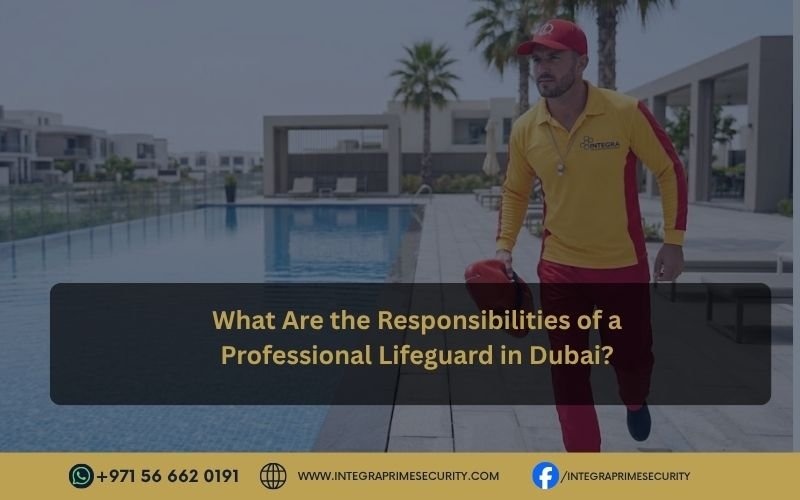
Swimming pools, hotel beaches, residential communities and leisure facilities across Dubai require effective water safety management to protect residents, guests and visitors. A professional lifeguard plays a central role in this responsibility by supervising swimmers, identifying potential hazards, preventing accidents and responding quickly when someone gets into difficulty.
However, a lifeguard’s responsibilities extend well beyond watching the water. The role involves continuous observation, enforcing safety procedures, maintaining rescue equipment, providing emergency assistance and coordinating with other safety personnel.
Understanding the responsibilities of a professional lifeguard in Dubai helps hotel operators, property managers, residential communities and aquatic facility owners recognise what effective lifeguard supervision should involve. This guide explains their main duties, required skills, emergency responsibilities and the importance of professional water safety management in the UAE.
One of the most important responsibilities of a professional lifeguard is maintaining active supervision of the designated swimming area. Their attention must remain focused on swimmers and surrounding conditions throughout their assigned duty hours.
At hotels, residential developments, resorts and recreational facilities in Dubai, swimming areas can become busy, particularly during weekends, holidays and peak visitor periods. Without proper supervision, a swimmer experiencing difficulty may go unnoticed.
Professional supervision involves:
Facilities arranging lifeguard services dubai should consider how personnel will maintain effective coverage across the entire swimming area, rather than simply having someone present beside the pool.
A professional lifeguard must remain alert, appropriately positioned and ready to intervene when necessary.
Preventing accidents is just as important as responding to emergencies. A professional lifeguard should recognise potential dangers before they develop into serious incidents.
Swimming facilities contain several possible hazards, including slippery surfaces, overcrowded pool areas, unsafe diving, damaged equipment and inappropriate swimming behaviour.
A lifeguard helps minimise these risks by carrying out regular observations and addressing unsafe conditions.
Common preventive responsibilities include:
For example, if a lifeguard notices children running around a wet poolside area, they should intervene promptly and remind them of the facility’s safety rules.
Similarly, if a rescue device is missing or damaged, the issue should be reported immediately so suitable corrective action can be arranged.
Preventive action reduces the likelihood of accidents and helps maintain a safer environment for everyone using the facility.
Water rescue is one of the most critical responsibilities of a professional lifeguard. When someone experiences difficulty in the water, a quick and appropriate response can be essential.
A swimmer in distress may struggle to stay afloat, become exhausted, panic or lose consciousness. These situations require a lifeguard to recognise the warning signs and follow an appropriate rescue procedure.
Depending on the circumstances, responsibilities may include:
Recognising an emergency: Identifying signs of drowning, unusual swimming movements, difficulty breathing or a swimmer who is unable to reach safety.
Assessing the situation: Quickly evaluating the location, condition of the swimmer, surrounding hazards and safest available rescue approach.
Using rescue equipment: Selecting appropriate equipment, such as a rescue tube, lifebuoy or other approved flotation device.
Performing the rescue: Applying the appropriate water rescue technique within the lifeguard’s training and the conditions of the incident.
Moving the casualty to safety: Bringing the individual to a suitable location where further emergency assistance can be provided.
A lifeguard must also understand when additional assistance is required. Complex incidents, multiple casualties or dangerous water conditions may require support from other emergency personnel.
The objective is to provide an effective rescue while minimising further risks to both the casualty and the lifeguard.
After a water rescue, a casualty may require immediate medical assistance. Professional lifeguards should be prepared to provide first aid and cardiopulmonary resuscitation (CPR) within their current training and qualifications.
CPR is an emergency procedure used when someone is unresponsive and not breathing normally. It helps maintain circulation while emergency medical assistance is arranged.
Depending on the situation and their training, a lifeguard’s responsibilities may include:
For example, if a swimmer is rescued from a pool and is found to be unresponsive and not breathing normally, the lifeguard should activate the emergency response procedure, request emergency assistance and begin appropriate resuscitation.
The availability of suitable first-aid supplies and emergency equipment is also important. Lifeguards should know where these resources are located and how to access them without unnecessary delays.
Professional lifeguards are responsible for helping ensure that swimmers follow the safety rules established by the facility.
Swimming pool rules are designed to reduce preventable injuries, maintain order and protect people using the facility.
Typical responsibilities include:
In Dubai, hotels, residential developments, sports clubs and other shared facilities may have different operational arrangements. Lifeguards should understand the rules applicable to their assigned location and communicate them clearly to visitors.
For instance, if a swimming pool has separate shallow and deep sections, the lifeguard should help ensure swimmers understand the designated areas and do not engage in activities that could endanger others.
Enforcement should remain professional, consistent and respectful.
A professional lifeguard must be familiar with the safety equipment available at their assigned facility.
Rescue equipment is useful only when it is accessible, suitable for the environment and ready for use during an emergency.
Depending on the facility, equipment may include:
Routine checks help identify missing, damaged or unsuitable equipment before an emergency occurs.
Lifeguards should also understand the location of emergency exits, communication points and first-aid facilities.
Where equipment requires specialist maintenance or inspection, the issue should be reported to the responsible facility management team rather than treated as a task the lifeguard can independently certify.
Children and inexperienced swimmers may face additional risks because they may not recognise dangerous situations or understand their swimming limitations.
Professional lifeguards should pay particular attention to swimmers who may need additional supervision.
This includes:
A lifeguard should monitor these situations carefully and intervene when unsafe behaviour or signs of distress become apparent.
However, lifeguard supervision does not replace parental or guardian responsibility. Parents and guardians must continue supervising their children, particularly young children who require close attention.
Clear communication between facility staff, parents and lifeguards helps strengthen overall water safety.
Professional lifeguarding in Dubai involves more than general swimming ability. Personnel must have the appropriate skills and qualifications for the environment in which they work.
The Emirates International Accreditation Centre (EIAC) recognises certification categories covering:
These categories reflect the different environments and competencies involved in aquatic safety.
EIAC’s accreditation requirements also establish a framework for certification bodies, including written, oral and practical examinations. Successful certifications and cards under the referenced scheme have a two-year validity period, with recertification required before expiry.
When appointing lifeguards, facility managers should consider:
The regulatory position also matters.
Dubai Law No. (2) of 2026 Concerning Public Safety came into force on 1 June 2026. Article 11 requires permanent shared swimming pools in buildings, residential compounds, clubs, hotels and public parks to appoint a qualified lifeguard in accordance with the applicable Agency requirements. Article 13 also requires beaches to have qualified lifeguards, rescue and public safety equipment, watchtowers and appropriate warning information.
The law provides a compliance period of up to two years, subject to its provisions, and existing implementing requirements continue where they do not conflict with the new law.
Employers should therefore check the applicable Dubai Municipality guidance and current requirements when arranging lifeguard coverage.
Lifeguards do not work independently of the wider facility safety arrangements. Effective communication with management and emergency personnel is an essential part of the role.
They may need to communicate with:
For example, if a pool becomes unsafe because of damaged equipment or a maintenance issue, the lifeguard should notify the responsible management team and follow the relevant closure or restricted-access procedure.
During an emergency, clear communication helps ensure that assistance is requested, emergency access is maintained and the appropriate personnel understand what has happened.
Professional lifeguards should also record incidents, observations and relevant safety concerns according to the facility’s reporting procedures.
Accurate reporting helps management identify recurring problems and review existing safety arrangements.
Not every aquatic environment presents the same risks. A hotel swimming pool, residential community pool and public beach require different supervision arrangements.
Lifeguards must understand the specific environment and adjust their approach accordingly.
Hotels and resorts may have multiple swimming areas, children’s pools and high guest turnover.
Lifeguards must maintain effective supervision, communicate swimming restrictions and remain prepared for emergencies involving guests who may be unfamiliar with the facility.
Apartment developments and residential compounds often provide shared swimming facilities for residents and visitors.
Lifeguards should understand access arrangements, monitor swimming activities and maintain awareness of children and inexperienced swimmers.
Beach environments involve additional challenges, including changing water conditions, waves, currents, weather and larger supervision areas.
Beach lifeguards require competencies appropriate to open-water rescue and must understand the designated swimming zones and local emergency arrangements.
Water parks and recreational facilities may contain slides, activity zones, changing water depths and high visitor numbers.
Lifeguards must understand the specific risks associated with each attraction and follow the facility’s operating and emergency procedures.
The right supervision arrangement depends on the type of facility, its layout, expected visitor numbers, activities and applicable safety requirements.
For facility operators, employing a professional lifeguard is part of a wider approach to aquatic risk management.
Effective coverage involves more than placing personnel beside a swimming pool. It requires suitable qualifications, clear responsibilities, appropriate equipment, site-specific procedures and effective communication.
When evaluating a provider, organisations should consider:
For organisations comparing providers, Integra Prime Security is an option to consider when looking for the best lifeguard company in dubai. Its lifeguard service offering covers aquatic safety support for swimming pools, hotels, resorts, residential communities and beach environments across the UAE.
The most suitable arrangement should always be based on the facility’s actual requirements rather than simply the number of personnel supplied.
The main responsibility is protecting swimmers through active supervision, accident prevention and emergency response. This includes identifying swimmers in distress, performing appropriate water rescues, providing first aid within their training and maintaining awareness of potential hazards.
Lifeguards should hold appropriate certification for their assigned environment, such as pool, beach or shallow-water lifeguarding. Dubai’s lifeguard certification framework includes relevant assessment requirements, and employers should verify that qualifications are current and suitable for the work being undertaken.
Dubai Law No. (2) of 2026 requires permanent shared swimming pools in hotels and other specified facilities to appoint a qualified lifeguard in accordance with the applicable Agency requirements. Facility operators should also check the relevant implementing guidance and compliance arrangements.
Yes. A suitably trained lifeguard can provide CPR and first aid within their current qualifications and training. They should follow established emergency procedures and arrange additional medical assistance when necessary.
A pool lifeguard primarily supervises a controlled swimming environment, whereas a beach lifeguard works in an open-water environment where conditions can change due to waves, currents, weather and water depth. Both require appropriate rescue competencies, but their specific training and operational responsibilities differ.
Professional lifeguards provide dedicated swimming-area supervision, identify potential hazards, help prevent accidents and respond to water-related emergencies. Their presence also supports the facility’s wider safety arrangements and applicable regulatory responsibilities.
How can we help you?
WhatsApp us