

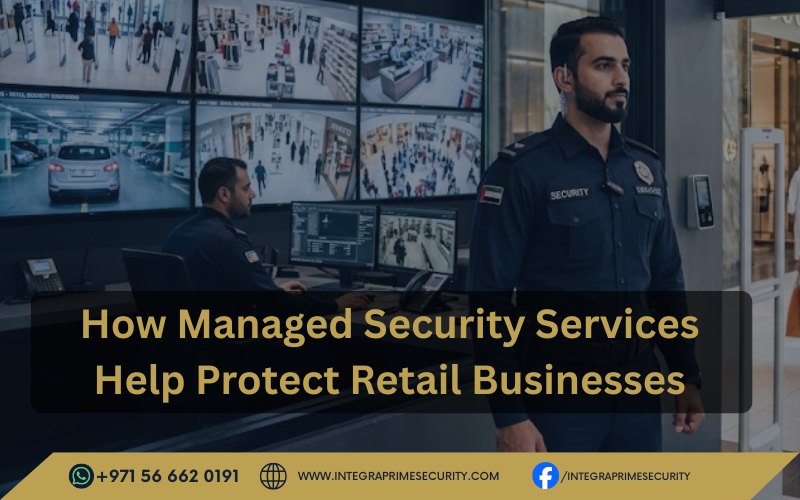
The UAE retail sector continues to evolve rapidly, driven by population growth, tourism, digital innovation, and expanding commercial developments. From luxury shopping destinations in Downtown Dubai and Dubai Marina to neighbourhood supermarkets in Sharjah, Ajman, and Ras Al Khaimah, retail businesses operate in highly competitive environments where customer experience and operational continuity are essential.
As retail operations become more sophisticated, security challenges have also become more complex. Retailers today must manage risks such as shoplifting, organised retail crime, employee theft, inventory shrinkage, unauthorised access, vandalism, and emergency incidents while maintaining a welcoming environment for customers and staff. Traditional security guarding alone is often no longer enough to address these evolving risks.
This is where managed security services for retail provide a more comprehensive solution. Rather than relying on a single security measure, managed security combines trained security personnel, CCTV monitoring, access control, mobile patrols, incident reporting, risk assessments, and ongoing security management into one coordinated strategy. The result is a proactive approach that helps retail businesses strengthen physical security, reduce operational risks, and support business continuity.
Whether operating a shopping mall in Dubai, a pharmacy in Abu Dhabi, an electronics retailer in Business Bay, or a convenience store in Jebel Ali, retailers benefit from security strategies tailored to their premises, customer traffic, and operational requirements.
Managed security services are an integrated approach to protecting commercial properties by combining professional security personnel, technology, operational planning, and continuous security management. Instead of responding only after an incident occurs, managed security focuses on identifying risks early, preventing security breaches, and improving overall operational resilience.
For retail businesses, this means security becomes part of everyday operations rather than a standalone service.
A managed retail security programme typically brings together:
Together, these measures create a layered security strategy that protects people, assets, inventory, and business operations.
Traditional security often focuses on placing one or more guards at a retail location. While visible security officers remain important, modern retail environments require broader protection.
Managed security services extend beyond physical guarding by integrating technology, communication, reporting, and ongoing risk management.
Instead of simply reacting to incidents, managed security providers continuously monitor potential threats, review security performance, recommend operational improvements, and adapt security measures as retail risks evolve.
For example, a shopping mall in Dubai may combine:
This integrated approach provides greater visibility across the entire property while supporting safer day-to-day operations.
One of the defining features of managed security services is prevention.
Rather than waiting for theft, vandalism, or disturbances to occur, security teams continuously assess risks and implement measures that reduce opportunities for incidents.
Examples include:
This proactive mindset helps retailers reduce disruption while maintaining a positive shopping experience.
Retail businesses face a wide range of security challenges that vary depending on store size, location, operating hours, and the type of products sold. High-value merchandise, heavy customer traffic, and multiple access points can create opportunities for both internal and external security threats.
Understanding these risks is the first step toward developing an effective retail security strategy.
Shoplifting remains one of the most common causes of retail loss worldwide. Opportunistic theft can occur in almost any retail environment, including:
Without appropriate surveillance, visible security officers, and effective store monitoring, repeated shoplifting incidents can contribute to significant financial losses over time.
Managed security services support shoplifting prevention by combining trained personnel with surveillance systems, customer observation techniques, and rapid incident response procedures.
Unlike isolated shoplifting, organised retail crime involves coordinated groups targeting high-value products for resale or illegal distribution.
Common targets include:
These incidents often involve careful planning, distraction tactics, and coordinated exits.
Retailers operating in busy commercial districts such as Business Bay, Dubai Marina, and major shopping centres may require enhanced surveillance, access control, and coordinated security operations to reduce these risks.
Internal theft is another challenge that retail businesses cannot overlook.
Although the majority of employees act responsibly, unauthorised stock removal, cash handling irregularities, and misuse of inventory systems can contribute to retail losses.
Managed security strategies help minimise internal risks through:
These measures also support greater accountability while protecting honest employees.
Inventory shrinkage refers to stock losses caused by theft, administrative errors, supplier fraud, or damaged goods.
For retailers, even small discrepancies can affect profitability over time.
Regular inventory reviews combined with CCTV monitoring, controlled storage access, and detailed incident reporting can help businesses identify patterns and address underlying causes before losses escalate.
Retail premises can also experience vandalism during business hours or after closing.
Examples include:
Beyond repair costs, property damage may interrupt trading and negatively affect customer confidence.
Visible security officers, mobile patrols, perimeter monitoring, and prompt incident reporting help reduce these risks while supporting a faster response when incidents occur.
Retail properties often contain areas that should only be accessed by authorised personnel.
Examples include:
Weak access control increases opportunities for theft, fraud, and operational disruption.
Managed security programmes typically combine physical access controls with visitor management procedures and staff verification processes to help protect sensitive areas.
Busy retail environments occasionally experience situations involving:
Security officers trained in conflict management and emergency procedures can help de-escalate incidents while maintaining a calm environment for customers and employees.
Where appropriate, security teams may also coordinate with Dubai Police, emergency medical services, or other relevant authorities.
Retail businesses should be prepared for a range of emergencies, including:
Managed security services support emergency planning by establishing response procedures, conducting risk assessments, and helping staff understand evacuation routes and emergency protocols.
Retailers should also ensure their emergency procedures align with guidance from relevant authorities such as the UAE Civil Defence and comply with applicable local requirements.
Modern retail security extends beyond physical protection.
Many stores now rely on interconnected systems such as:
Although managed physical security services do not replace cybersecurity measures, they can complement broader organisational security strategies by protecting physical infrastructure, monitoring access to sensitive equipment, and supporting incident investigations when security events involve both digital and physical elements.
Security incidents can interrupt normal retail operations, resulting in:
A proactive retail security management strategy helps reduce these risks by identifying vulnerabilities before they affect business performance.
Effective retail security is built on multiple layers of protection rather than relying on a single security measure. By combining trained security officers, surveillance technology, operational procedures, and ongoing risk management, managed security services for retail help businesses reduce vulnerabilities while maintaining a safe and welcoming environment.
The following sections explore some of the key ways managed security supports retail operations across the UAE.
Inventory is one of a retailer’s most valuable assets, making its protection a core priority. From luxury boutiques in Downtown Dubai to electronics retailers in Dubai Silicon Oasis and large supermarkets in Abu Dhabi, businesses rely on accurate stock levels and secure storage to operate efficiently.
Managed security services help safeguard inventory by implementing layered protection measures such as:
Rather than focusing solely on responding to theft, these measures aim to identify vulnerabilities early and strengthen overall retail asset protection. Businesses that regularly review their physical security arrangements are often better positioned to minimise inventory losses while maintaining efficient day-to-day operations.
Retail theft can occur in many forms, from opportunistic shoplifting to organised retail crime and internal theft. An effective security strategy addresses both external and internal risks without creating an unwelcoming shopping environment.
Managed security services use a combination of trained personnel, technology, and operational procedures to support retail loss prevention. Security officers maintain a visible presence, monitor customer activity, and respond appropriately to suspicious behaviour while following company policies and applicable legal requirements.
Additional measures may include:
By analysing incident trends and identifying recurring vulnerabilities, managed security teams can recommend practical improvements that support retail shrinkage prevention, reduce inventory losses, and improve overall operational efficiency.
A secure retail environment benefits everyone. Customers are more likely to return to stores where they feel safe, while employees can focus on delivering excellent service when supported by effective security measures.
Security officers play an important role in maintaining a professional and reassuring presence throughout retail premises. Their responsibilities often include:
Retail environments such as shopping malls, department stores, supermarkets, and luxury boutiques often experience fluctuating visitor numbers throughout the day. Managed security services help retailers adapt staffing levels and operational procedures based on customer traffic, seasonal demand, and identified risks.
Modern CCTV monitoring is far more than simply recording video footage. When integrated into a managed security programme, surveillance systems provide real-time visibility across retail premises, enabling faster responses to potential security incidents.
CCTV systems can help monitor:
When monitored by trained personnel, surveillance systems support the early identification of suspicious activity, unauthorised access, safety hazards, or operational issues. Recorded footage may also assist with incident reviews and investigations where appropriate.
Retailers should ensure CCTV systems are installed, operated, and maintained in accordance with applicable UAE regulations and privacy requirements.
Retail businesses often have areas that require restricted access to protect inventory, cash handling operations, sensitive information, and essential equipment.
Examples include:
Managed security services strengthen access control through a combination of physical security measures and operational procedures, including:
Limiting access to authorised personnel reduces opportunities for theft, accidental damage, and operational disruption while improving accountability.
Unexpected incidents can occur in any retail environment. Having a clear emergency response plan helps minimise disruption and protects both people and property.
Managed security teams support emergency preparedness by:
Depending on the nature of the incident, security personnel may coordinate with relevant authorities such as Dubai Police, UAE Civil Defence, or emergency medical services.
Preparedness is particularly important for high-footfall locations such as shopping malls, supermarkets, and large retail centres where coordinated responses help maintain public safety.
Security is closely linked to business continuity. A significant security incident can interrupt operations, affect customer confidence, delay deliveries, and create unexpected financial costs.
Managed security services contribute to operational resilience by helping retailers:
Regular reviews of security performance also enable businesses to adapt their security strategies as operations grow or risks change.
For retailers expanding across multiple UAE locations, consistent security management supports standardised procedures while allowing flexibility to address site-specific risks.
| Retail Security Risk | How Managed Security Services Help |
| Shoplifting | Visible security officers, CCTV monitoring, rapid incident response |
| Employee Theft | Access control, surveillance, incident reporting, security audits |
| Inventory Shrinkage | Inventory protection, CCTV integration, reporting, operational reviews |
| Customer Safety | Security personnel, emergency planning, visitor management |
| After-Hours Risks | Mobile patrols, alarm response, remote monitoring |
| Operational Disruptions | Risk assessments, integrated security management, business continuity planning |
Effective managed security services combine multiple security measures into one coordinated strategy. Each component supports the others, creating a comprehensive approach to protecting retail businesses rather than relying on isolated services.
Professional retail security guards remain one of the most visible elements of retail security. Their responsibilities extend beyond monitoring entrances and responding to incidents.
Depending on operational requirements, security officers may assist with:
Well-trained officers also act as a visible deterrent, helping reduce opportunities for theft and disorder.
Integrated surveillance systems allow security teams to observe activity across retail premises in real time.
Benefits include:
When combined with on-site personnel, CCTV monitoring provides a stronger overall security solution than either measure alone.
Not every retail property requires permanent security officers in every location.
Mobile patrol services provide scheduled or random inspections of:
Regular patrols increase visibility while helping identify potential security concerns before they develop into larger issues.
Modern access control solutions help retailers manage who can enter restricted areas.
These systems may include:
Effective access control strengthens accountability while protecting valuable inventory and sensitive operational areas.
Accurate documentation supports continuous security improvement.
Managed security providers typically record incidents involving:
Detailed reporting helps businesses identify recurring trends, review procedures, and make informed operational decisions.
Every retail business has different security requirements based on factors such as:
A professional security risk assessment helps identify vulnerabilities and prioritise practical improvements that align with the retailer’s operational needs.
Rapid alarm response helps minimise disruption when incidents occur outside normal trading hours.
Alarm response services may include:
This supports retailers by reducing response times and improving after-hours property protection.
Security requirements change as businesses grow.
Professional security consultancy supports retailers by reviewing existing arrangements, identifying emerging risks, and recommending improvements based on operational changes, new technology, and industry best practices.
Regular reviews help ensure that security strategies remain effective over time rather than becoming outdated.
Although every retail environment has unique operational requirements, many sectors benefit from an integrated security strategy.
Examples include:
Across the UAE retail sector, security strategies should always be tailored to each business’s size, location, operational model, and specific risk profile.
| Traditional Security | Managed Security Services |
| Standalone guarding | Integrated security strategy |
| Limited technology | Technology-enabled security |
| Reactive response | Proactive risk management |
| Basic reporting | Comprehensive incident reporting |
| Fixed procedures | Continuous improvement |
| Separate services | Unified security management |
Traditional security remains valuable for many retail environments, particularly where visible guarding is required. However, managed security services offer broader protection by combining trained personnel, surveillance technology, operational oversight, and ongoing risk management into a coordinated solution.
This integrated approach enables retailers to respond more effectively to changing risks while supporting safer operations and stronger business resilience.
Retail security is most effective when it combines people, processes, and technology. Businesses can strengthen their overall security posture by adopting practical measures such as:
Every retail business has unique security requirements. Factors such as store size, product value, customer traffic, operating hours, and location should all be considered when developing an effective security strategy.
A tailored approach helps retailers balance strong protection with a positive customer experience.
Managed security services for retail combine trained security officers, CCTV monitoring, access control, mobile patrols, risk assessments, incident reporting, and ongoing security management into one integrated solution. This coordinated approach helps retailers protect people, property, and inventory while supporting safer day-to-day operations.
Managed security helps reduce retail theft through a combination of visible security personnel, surveillance systems, controlled access to restricted areas, regular patrols, incident reporting, and proactive risk assessments. Together, these measures support retail loss prevention by identifying vulnerabilities and deterring both opportunistic and organised theft.
Yes. Managed security solutions can be tailored to businesses of different sizes. A small convenience store may require CCTV monitoring and periodic mobile patrols, while a larger shopping centre or retail chain may benefit from a broader combination of on-site security officers, access control, and integrated security management.
Although services vary depending on operational needs, managed retail security commonly includes:
The specific mix of services should be based on the retailer’s size, layout, operating hours, and risk profile.
CCTV monitoring improves visibility across retail premises by helping security teams observe activity in real time, identify suspicious behaviour, support investigations, and respond more quickly to incidents. When combined with trained security personnel, surveillance systems contribute to a more effective and proactive security strategy.
Yes. Managed security services help create a safer shopping environment by maintaining visible security, responding to incidents professionally, supporting emergency procedures, and helping manage customer flow during busy periods. These measures can contribute to a positive experience for both customers and employees.
Access control helps protect sensitive areas such as stockrooms, cash offices, loading bays, and management offices. Restricting access to authorised personnel reduces opportunities for theft, improves accountability, and supports overall retail security management.
When selecting a provider, consider factors such as:
Businesses operating in Dubai should also verify whether security arrangements are subject to requirements issued by the Security Industry Regulatory Agency (SIRA) and consult the relevant authorities where necessary.
How can we help you?
WhatsApp us