

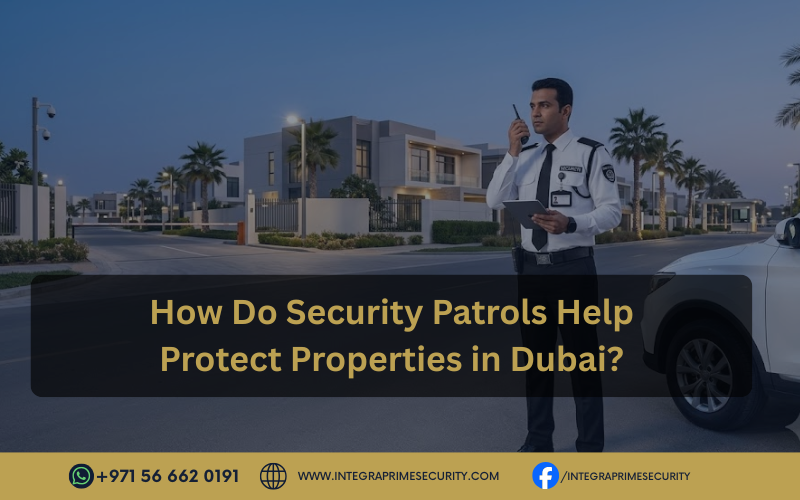
Property security in Dubai has become increasingly important as residential communities, commercial buildings, warehouses, construction sites, and vacant properties continue to develop across the emirate. While CCTV, alarms, access control, and smart security technology can provide valuable protection, physical security patrols add another layer by putting trained personnel directly in and around the property.
Patrol Security Services are generally designed around regular physical checks, visible deterrence, observation, and incident reporting. Understanding how these patrols work can help property owners, landlords, facilities managers, and businesses decide which security measures are appropriate for their individual circumstances.
Dubai has a diverse property environment, ranging from high-rise residential developments and villas to retail centres, offices, warehouses, industrial facilities, and construction projects. Each type of property can have different security vulnerabilities.
A building that is occupied throughout the day may have natural activity around entrances and common areas. By contrast, a vacant commercial unit, warehouse, or construction site may have periods when there is little or no human presence.
Common property-security concerns can include:
Dubai Police itself promotes technology-led security and 24/7 monitoring. Its Smart Home Security system, for example, combines sensors, cameras, remote monitoring, and verified alerts before genuine emergencies are escalated to Dubai Police.
This demonstrates an important principle: effective property protection is often layered rather than dependent on one security measure.
A security patrol involves trained personnel physically checking a property or defined area according to an established security procedure.
Patrols may be conducted on foot or using a security vehicle, depending on the size, layout, and risk profile of the location. During a patrol, officers can observe the property’s external areas, entrances, boundaries, parking areas, gates, windows, and other vulnerable points.
The purpose is not simply to drive around a site. A properly planned patrol involves observation, identification of unusual conditions, documentation, and escalation when a potential security issue is discovered.
For example, an officer might notice that:
These observations can be valuable because physical patrols provide information that may not always be available from a remote camera alone.
A visible security presence can make a property appear actively monitored rather than unattended.
Uniformed officers and marked security vehicles can increase the perceived likelihood that suspicious behaviour will be noticed. This does not guarantee that criminal activity will be prevented, but it can form an important part of a wider deterrence strategy.
The effectiveness of visibility depends on factors such as patrol frequency, site layout, lighting, access controls, and the property’s surrounding environment.
CCTV can monitor specific camera views, while alarms can identify particular events. A patrol officer, however, can physically inspect the condition of the property.
This distinction is particularly relevant for large sites where there may be blind spots, multiple entrances, external storage areas, or extensive perimeters.
Physical inspections can help identify security and maintenance concerns before they develop into more serious problems.
Many properties have different risk profiles outside normal operating hours.
Offices may become largely empty overnight. Retail premises can remain closed for several hours. Construction sites may have valuable materials and equipment left on-site after workers leave.
Patrols can provide an additional layer of observation during these periods, helping property managers maintain a physical security presence when normal activity is reduced.
Technology and human security should not necessarily be viewed as competing options.
A layered approach can combine:
| Security measure | Main role |
| CCTV | Visual monitoring and recorded evidence |
| Intruder alarm | Detection and alerting |
| Access control | Restricting authorised entry |
| Security lighting | Improving visibility |
| Perimeter protection | Controlling physical boundaries |
| Mobile patrols | Physical inspection and visible presence |
| Incident reporting | Recording and escalating security concerns |
Dubai Police’s Smart Home Security model illustrates how different technologies can work together: sensors and cameras detect activity, a command centre verifies alerts, and confirmed emergencies can be escalated appropriately.
For commercial and industrial properties, physical patrols can provide the human element alongside these technologies.
The exact patrol procedure should depend on a property’s risk assessment. A warehouse may require different checks from a residential community or construction site.
However, typical observations can include:
The objective is early identification. Finding a damaged gate during a routine inspection may allow the responsible party to address it before the vulnerability is exploited.
There is no universal patrol schedule that is appropriate for every Dubai property.
Frequency should reflect factors such as the property’s:
A high-value industrial site with multiple access points may require a very different approach from a small commercial property.
Risk assessment should therefore come before deciding how frequently physical checks should occur.
A patrol becomes more useful when observations are properly documented.
Security reports can create a record of patrol activity and identify recurring issues. Depending on the procedures in place, reports may document the time of the visit, areas checked, unusual observations, incidents, actions taken, and matters requiring follow-up.
For facilities managers and property owners, this information can help reveal patterns.
For example, repeated observations of an unsecured rear entrance could indicate that an access-control procedure needs improvement. Similarly, recurring lighting failures around a perimeter could identify an infrastructure problem rather than simply a security problem.
This is where Patrol Security Services can become part of a broader property risk-management strategy rather than functioning as an isolated security measure.
Security patrols can be relevant to many property types in Dubai, including:
The appropriate approach depends on the property’s individual circumstances.
For example, a construction site may place greater emphasis on perimeter breaches, equipment, and material storage, while an occupied residential development may focus more heavily on access points, common areas, vehicle movement, and suspicious activity.
The most important point is that patrols should not automatically be considered a complete security solution.
Effective property protection generally combines several layers that address different risks. Physical barriers can restrict access, CCTV can provide visual coverage, alarms can generate alerts, and patrol officers can physically investigate conditions on-site.
The right combination should be based on a documented risk assessment rather than simply choosing the largest number of security measures.
For property owners in Dubai, this approach can also help avoid gaps between technology and physical security. A camera may detect an event, but someone still needs an appropriate procedure for assessing and responding to the situation.
Frequently Asked Questions
Yes, physical patrols can provide an additional layer of deterrence, observation, and incident detection for commercial properties. Their effectiveness depends on factors such as patrol planning, property layout, existing security measures, and the site’s specific risk profile.
Checks can include entrances, gates, perimeter areas, parking zones, windows, restricted areas, signs of damage, unusual activity, and other vulnerable points identified during a security risk assessment.
Generally, patrols and CCTV serve different purposes. CCTV provides remote visual monitoring and recorded evidence, while patrol officers can physically inspect areas and identify conditions that cameras may not capture. Using both can provide broader security coverage.
There is no standard frequency for every property. Patrol schedules should consider the property’s size, location, operating hours, asset value, previous incidents, and existing security controls.
They can be particularly useful during periods when normal activity has stopped. Physical visits can provide a visible presence and help identify signs of intrusion, damage, or other issues that may otherwise remain unnoticed until the property reopens.
Depending on the agreed patrol procedure, officers may document visible issues such as damaged gates, broken windows, failed lighting, water leaks, or other conditions requiring attention. These observations can then be passed to the relevant property or facilities team.
A layered approach is often more effective than relying on a single measure. Depending on the property, this may include CCTV, alarms, access control, perimeter protection, lighting, security patrols, and documented incident-response procedures.
Businesses should begin with a property-specific risk assessment. This can consider the location, building layout, operating hours, assets, previous incidents, access points, surrounding environment, and existing security controls before determining an appropriate security strategy.
How can we help you?
WhatsApp us