

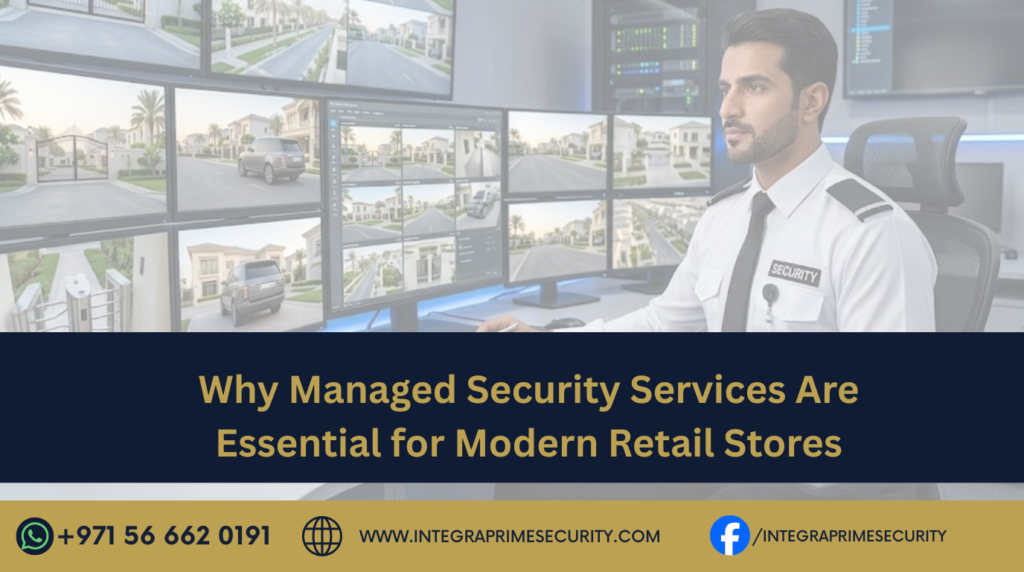
The UAE retail sector continues to grow, driven by expanding shopping destinations, evolving consumer expectations, and ongoing investment in commercial developments. From luxury boutiques in Downtown Dubai and Dubai Marina to supermarkets in Sharjah, shopping centres in Abu Dhabi, and retail parks in Jebel Ali, businesses operate in increasingly dynamic environments where customer experience and security go hand in hand.
As retail operations become more sophisticated, so do the challenges associated with protecting people, property, and inventory. Retailers must balance delivering excellent customer service with managing risks such as shoplifting, organised retail crime, employee theft, inventory shrinkage, vandalism, and after-hours security concerns. At the same time, businesses are expected to maintain safe premises for employees, visitors, contractors, and suppliers while ensuring operational continuity.
This is why managed security services for retail in Dubai have become an important part of modern retail operations. Rather than relying solely on security guards or standalone surveillance systems, managed security combines trained personnel, technology, security management, and ongoing risk assessment into a coordinated strategy. The result is a more proactive approach that helps retailers identify risks early, respond effectively to incidents, and support long-term business resilience.
Whether operating a single convenience store or managing multiple retail locations across the United Arab Emirates, businesses benefit from understanding how integrated security solutions contribute to loss prevention, customer confidence, and day-to-day operational efficiency.
Managed security services for retail refer to a coordinated approach to protecting retail businesses by combining trained security personnel, technology, operational procedures, and continuous security management.
Unlike traditional security arrangements that may focus primarily on guarding entrances or responding to incidents, managed security is designed to provide ongoing oversight, risk reduction, and continuous improvement across the entire retail environment.
The objective is not only to respond when something goes wrong but also to reduce the likelihood of security incidents occurring in the first place.
Retail security has changed significantly over the past decade.
Modern retail environments often include:
Managing these environments requires more than a visible security presence. It requires coordinated planning, technology integration, and clear operational procedures.
Managed security brings these elements together into one cohesive strategy.
An effective retail security programme typically combines several layers of protection.
These may include:
Rather than operating independently, these components work together to improve visibility, communication, and decision-making.
For example, CCTV monitoring can identify suspicious behaviour, while trained security officers respond on-site using established procedures. Incident reports then provide valuable information that helps managers review trends and improve future security planning.
One of the defining characteristics of managed security is its proactive approach.
Traditional security often focuses on responding after an incident has occurred.
Managed security aims to identify vulnerabilities before they become problems through:
This proactive mindset helps retailers minimise disruption while creating safer environments for customers and employees.
Retail businesses face a wide variety of security challenges that extend well beyond preventing shoplifting.
As stores become busier and operations more connected, security teams must manage risks affecting people, assets, inventory, and business continuity.
The nature of these risks varies depending on the type of retail business, its location, operating hours, and customer profile.
Shoplifting remains one of the most common challenges facing retailers worldwide, including across the UAE.
Incidents may range from opportunistic theft involving low-value items to organised groups targeting expensive products.
Without effective security measures, repeated losses can significantly affect profitability.
Visible security personnel, surveillance systems, and well-designed store procedures can help discourage theft while supporting a positive shopping experience.
Organised retail crime involves coordinated groups targeting retail businesses for financial gain.
These incidents may involve:
Luxury retailers, jewellery stores, electronics retailers, and department stores are often at greater risk because of the value of the products they carry.
Professional security planning helps retailers prepare for these more complex threats.
Although most employees act responsibly, internal theft remains a recognised challenge across many retail sectors.
Risks may include:
A balanced security strategy combines access control, inventory monitoring, incident reporting, and clear operational procedures while maintaining a positive workplace culture.
Inventory shrinkage refers to losses caused by theft, administrative errors, supplier discrepancies, or damage.
For supermarkets, hypermarkets, pharmacies, and large retail chains, even small percentages of inventory shrinkage can represent substantial financial losses over time.
Managed security supports inventory protection through:
When combined with effective inventory management systems, these measures contribute to stronger retail loss prevention strategies.
Retail premises may occasionally experience vandalism, particularly outside business hours.
Damage to storefronts, equipment, or facilities can interrupt operations and lead to unexpected repair costs.
Security patrols, surveillance, and after-hours monitoring help reduce these risks while supporting faster responses when incidents occur.
Modern retail premises often include restricted areas such as:
Controlling access to these areas helps protect inventory, sensitive information, and operational assets.
Access control systems combined with trained security personnel provide an effective way to manage authorised entry while recording visitor activity where appropriate.
Retail environments involve frequent interactions between customers, staff, and contractors.
Occasionally disagreements may arise regarding:
Professional security officers trained in communication and conflict management can often help resolve situations calmly before they escalate.
Retail stores should also prepare for unexpected emergencies.
Examples include:
Prepared security teams play an important role in supporting emergency response procedures while coordinating with management and emergency services when required.
Retail security responsibilities continue after stores close.
During non-operating hours, businesses remain vulnerable to:
Managed security strategies often combine alarm monitoring, CCTV surveillance, mobile patrols, and scheduled inspections to help protect commercial properties outside trading hours.
Effective retail security is about more than preventing theft. It contributes to operational efficiency, customer confidence, staff wellbeing, and business continuity.
An integrated approach helps retailers respond to today’s evolving security challenges while supporting long-term growth.
Inventory shrinkage remains one of the most significant financial challenges for retailers.
Managed security helps reduce losses through a combination of trained personnel, surveillance technology, access control, and regular security reviews.
Practical measures include:
Rather than relying on a single solution, managed security uses multiple layers of protection that work together to strengthen loss prevention.
A safe retail environment encourages customers to shop with confidence while supporting employee wellbeing.
Security personnel contribute by:
Visible, professional security also reassures customers that the business takes safety seriously without creating an unwelcoming atmosphere.
Loss prevention extends beyond responding to theft after it has occurred.
Managed security services support long-term prevention by:
By combining data, technology, and experienced security personnel, retailers can make informed decisions that reduce preventable losses over time.
Modern retail environments generate a constant flow of activity, making it difficult for managers to observe every area of the business at all times. Managed security services provide continuous oversight by combining trained personnel with technology such as CCTV monitoring, alarm systems, and communication platforms.
Real-time monitoring enables security teams to:
For example, if CCTV operators notice suspicious activity in a high-value section of a store, they can immediately notify on-site security officers, allowing a prompt and measured response before the situation escalates.
This coordinated approach reduces response times while supporting safer retail operations.
Retail businesses in the UAE must operate within applicable health, safety, and security requirements. Depending on the location and type of premises, businesses may also need to consider guidance or requirements issued by organisations such as the Security Industry Regulatory Agency (SIRA), Dubai Police, and the UAE Civil Defence.
Managed security services can support compliance by helping businesses:
It’s important to note that security obligations vary depending on the emirate, business activity, and property type. Retailers should always confirm the specific requirements that apply to their operations rather than assuming a single standard applies across all businesses.
Effective security contributes to smoother day-to-day operations.
When trained security personnel manage access control, monitor customer areas, respond to incidents, and support emergency procedures, retail staff can focus on serving customers and running the business.
Managed security also provides valuable operational insights through:
These reports help business owners identify recurring issues and make informed decisions that improve both security and operational efficiency.
Customer confidence is one of the most valuable assets a retailer can build.
A well-managed security programme helps create an environment where customers feel safe, employees feel supported, and business operations continue with minimal disruption.
Professional security officers contribute positively by:
A positive security presence can strengthen customer trust while protecting the reputation of retail businesses across competitive markets such as Business Bay, Dubai Marina, and Downtown Dubai.
Managed security is most effective when multiple security measures work together as part of a coordinated strategy rather than operating independently.
Each component contributes to protecting people, assets, and business operations.
Professional security officers remain at the centre of most retail security programmes.
Their responsibilities may include:
Their visible presence also helps reassure customers while discouraging opportunistic crime.
CCTV monitoring provides continuous surveillance across key retail areas.
Common monitoring locations include:
Modern surveillance systems support investigations, improve situational awareness, and provide valuable evidence when incidents occur.
When combined with trained operators and on-site security personnel, CCTV becomes a proactive security tool rather than simply a recording system.
Not every retail location requires permanent on-site guarding throughout the day or night.
Mobile patrols provide scheduled or random inspections that help protect:
Patrol officers check for suspicious activity, unsecured entrances, signs of damage, and other potential security concerns while maintaining a visible deterrent.
Access control helps ensure that only authorised individuals enter restricted areas.
Retail businesses commonly use access control for:
Combining electronic access systems with security personnel provides stronger protection while improving accountability and audit trails.
Accurate documentation is an important part of effective security management.
Professional reporting helps retailers:
Detailed reporting also provides valuable information for reviewing security procedures and reducing future risks.
Every retail business faces different security challenges.
A security risk assessment evaluates factors such as:
The findings help determine appropriate security measures that match the business’s operational needs rather than applying a one-size-fits-all approach.
Retail businesses should prepare for unexpected situations before they occur.
Emergency planning may include procedures for:
Managed security services help ensure personnel understand their responsibilities and can respond in a coordinated manner when emergencies arise.
Security consultancy supports long-term improvements rather than focusing only on day-to-day operations.
Consultants may assist businesses by:
This ongoing approach allows security programmes to evolve alongside changing business requirements.
While every retail business has unique security needs, some sectors face higher operational risks due to product value, customer volume, or extended trading hours.
Managed security services can be tailored to suit businesses of different sizes and industries.
Large shopping centres require integrated security because they accommodate multiple retailers, high visitor numbers, contractors, and public spaces.
Security teams support:
Busy supermarkets experience constant customer movement, frequent deliveries, and extensive stock management.
Managed security helps reduce:
Jewellery stores, designer boutiques, and luxury fashion retailers often stock high-value merchandise.
These businesses benefit from:
Electronic goods remain attractive targets for organised theft due to their resale value.
Integrated security supports:
Fashion outlets often experience seasonal increases in customer traffic and fitting-room activity.
Managed security helps monitor customer areas while maintaining a welcoming shopping environment.
Pharmacies require careful protection of medicines, controlled products, and sensitive customer areas.
Security personnel help maintain safe premises while supporting access control and incident response procedures.
Department stores combine multiple product categories under one roof, creating complex security requirements.
Integrated security helps coordinate surveillance, customer safety, stock protection, and emergency planning across larger retail spaces.
Retail warehouses handle significant volumes of stock and delivery activity.
Security priorities often include:
Businesses operating multiple branches benefit from consistent security standards across every location.
Managed security services can help standardise:
Smaller stores may not require extensive security infrastructure but can still benefit from:
Scalable security solutions allow businesses to implement protection appropriate to their size and risk profile.
| Traditional Security | Managed Security Services |
| Focuses primarily on guarding | Combines people, technology, and security management |
| Reactive approach | Proactive risk prevention |
| Limited incident reporting | Detailed reporting and analytics |
| Basic patrols | Integrated patrols, CCTV, access control, and monitoring |
| Independent security systems | Coordinated security operations |
| Minimal performance analysis | Continuous review and improvement |
Traditional guarding remains valuable in many environments, but managed security offers a broader, more strategic approach. By integrating trained personnel, technology, reporting, and ongoing risk assessments, retailers gain greater visibility into their security operations and can make informed decisions that support long-term resilience.
Selecting a security provider is an important business decision. Rather than focusing solely on cost, retailers should consider the provider’s ability to deliver a comprehensive security solution that aligns with their operational needs.
Key factors to evaluate include:
Choosing a provider that takes a consultative approach can help ensure your retail security strategy remains effective as your business evolves.
Managed security services for retail combine trained security personnel, technology, security management, and ongoing risk assessments into a coordinated strategy. Rather than relying on individual security measures, this approach integrates services such as CCTV monitoring, mobile patrols, access control, incident reporting, and security consultancy to help protect retail businesses.
Retail stores face a range of security challenges, including shoplifting, inventory shrinkage, employee theft, vandalism, and after-hours risks. Managed security services help reduce these risks while supporting customer safety, employee wellbeing, business continuity, and day-to-day operations.
Managed security supports theft prevention through multiple layers of protection, including:
Using these measures together helps identify vulnerabilities, discourage criminal activity, and improve response times when incidents occur.
Yes. Managed security solutions can be scaled to suit businesses of different sizes. A convenience store may require CCTV monitoring and periodic mobile patrols, while a large shopping centre may need on-site security officers, integrated surveillance, and comprehensive security management. The right solution depends on the store’s size, location, operating hours, and risk profile.
Many retail sectors benefit from an integrated security approach, including:
Each business has different operational risks, so security strategies should be tailored accordingly.
In many cases, yes. CCTV monitoring is often a core component of managed retail security because it enhances situational awareness, supports investigations, and allows security teams to respond more quickly to potential incidents. The specific technology and level of monitoring should be based on the retailer’s operational requirements.
Professional security personnel contribute to a safer shopping environment by:
A visible and approachable security presence can also increase customer confidence without affecting the overall shopping experience.
When selecting a security provider, consider factors such as:
Choosing a provider that understands your business operations and can tailor security measures to your specific risks is often more effective than adopting a standardised solution.
Managed security services for retail combine trained security personnel, technology, security management, and ongoing risk assessments into a coordinated strategy. Rather than relying on individual security measures, this approach integrates services such as CCTV monitoring, mobile patrols, access control, incident reporting, and security consultancy to help protect retail businesses.
Retail stores face a range of security challenges, including shoplifting, inventory shrinkage, employee theft, vandalism, and after-hours risks. Managed security services help reduce these risks while supporting customer safety, employee wellbeing, business continuity, and day-to-day operations.
Managed security supports theft prevention through multiple layers of protection, including:
Visible security officers
CCTV monitoring
Access control
Mobile patrols
Incident reporting
Regular security risk assessments
Using these measures together helps identify vulnerabilities, discourage criminal activity, and improve response times when incidents occur.
Yes. Managed security solutions can be scaled to suit businesses of different sizes. A convenience store may require CCTV monitoring and periodic mobile patrols, while a large shopping centre may need on-site security officers, integrated surveillance, and comprehensive security management. The right solution depends on the store’s size, location, operating hours, and risk profile.
Many retail sectors benefit from an integrated security approach, including:
Shopping malls
Supermarkets and hypermarkets
Fashion retailers
Jewellery stores
Electronics retailers
Pharmacies
Department stores
Home furnishing stores
Warehouse retail operations
Convenience stores
Each business has different operational risks, so security strategies should be tailored accordingly.
In many cases, yes. CCTV monitoring is often a core component of managed retail security because it enhances situational awareness, supports investigations, and allows security teams to respond more quickly to potential incidents. The specific technology and level of monitoring should be based on the retailer’s operational requirements.
Professional security personnel contribute to a safer shopping environment by:
Monitoring customer areas
Responding to incidents promptly
Assisting during emergencies
Managing queues and crowd movement
Supporting evacuation procedures when necessary
A visible and approachable security presence can also increase customer confidence without affecting the overall shopping experience.
When selecting a security provider, consider factors such as:
Experience within the UAE retail sector
Understanding of relevant regulatory guidance
Retail security expertise
Technology integration
Security risk assessment capabilities
Incident reporting processes
Staff training standards
Customer support and responsiveness
Choosing a provider that understands your business operations and can tailor security measures to your specific risks is often more effective than adopting a standardised solution.
How can we help you?
WhatsApp us