

Retail theft, employee theft, administrative errors, and vendor fraud continue to be major drivers of inventory shrinkage worldwide. According to the National Retail Federation’s National Retail Security Survey, average retail shrink reached 1.6% of sales, resulting in more than $112 billion in losses. Security experts note that the most effective loss-prevention programs combine surveillance technology with trained staff, operational controls, and regular audits rather than relying on cameras alone.
While CCTV remains a valuable deterrent and investigative tool, industry research shows that technology delivers the best results when paired with trained personnel who can identify suspicious behavior, respond in real time, and enforce security procedures. Retailers that integrate surveillance, staff training, and active loss-prevention measures are generally better positioned to reduce shrinkage and protect profitability.
Cameras are reactive, not preventive. They record events, but they cannot engage with suspicious individuals, deter theft in real time, or respond to incidents as they happen.
Three critical limitations:
Coverage gaps exist
Changing rooms, storage areas, shelving layouts, and blind spots can limit visibility even in well-designed systems.
Real-time monitoring is difficult
A busy retail environment generates multiple camera feeds, customer interactions, and transactions simultaneously. Maintaining constant monitoring can be challenging.
No response mechanism
CCTV can provide evidence after an incident, but it cannot physically intervene when theft or disruption occurs.
The reality: Professional shoplifters and organized theft groups often look for opportunities created by busy periods, limited staffing, and delayed responses—not just camera blind spots.
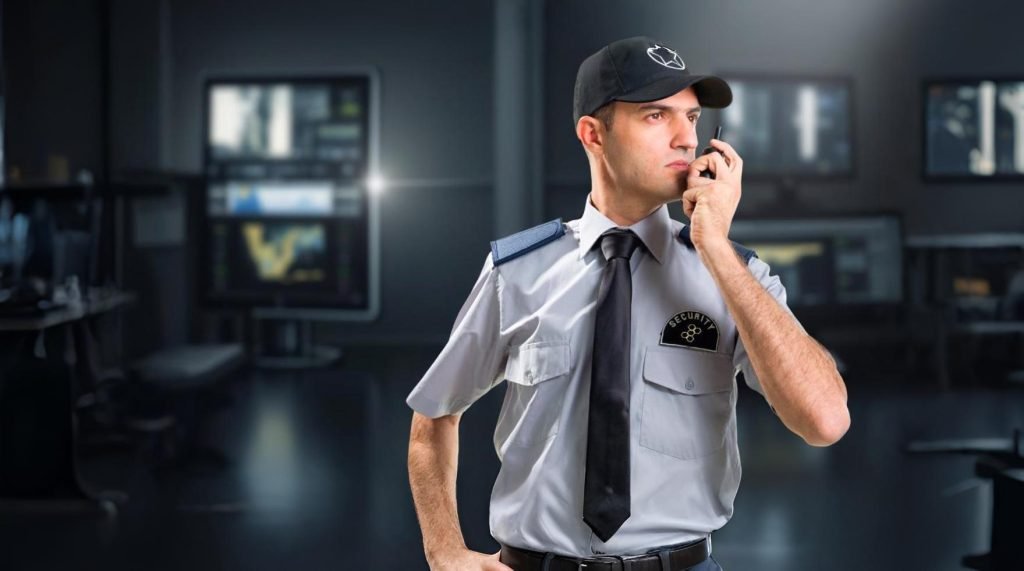
A trained retail security guard operates on a different principle: identify risks early and intervene before losses occur.
Five key advantages:
Real-time threat detection
Guards observe behaviour, identify suspicious activity, and assess situations that technology alone may miss.
Immediate response
Guards can investigate concerns, engage individuals, and respond as situations develop.
Psychological deterrent
A visible security presence can discourage opportunistic theft and disruptive behaviour.
Customer safety
Guards help manage crowds, prevent disputes, and support emergency response procedures.
Incident documentation
Professional incident reports combined with CCTV footage create stronger records for investigations and insurance purposes.
The strongest retail security programmes combine trained personnel with surveillance technology.
Here’s how it works:
Guards fill the response gap
They act on suspicious behaviour and emerging situations.
CCTV extends guard vision
Cameras provide broader visibility and recorded evidence.
Real-time collaboration
Guards and surveillance systems work together to verify concerns and improve response effectiveness.
Layered documentation
Incidents are supported by reports, footage, and operational records.
Scalability
Integrated security solutions can be adapted to store size, operating hours, and risk levels.
The result: stronger deterrence, faster response, and better overall loss-prevention coverage than either approach alone.
Professional security is particularly valuable in Dubai because:
High visitor volumes
Major shopping destinations attract large numbers of residents and international visitors throughout the year.
Peak-hour vulnerability
Weekends, holidays, promotions, and seasonal events can significantly increase customer traffic and place additional pressure on store staff.
High-value merchandise
Electronics, luxury goods, cosmetics, jewellery, and designer fashion remain attractive targets for theft.
Customer experience expectations
Retailers must balance security requirements with a welcoming shopping environment.
These factors make proactive security planning increasingly important for retailers operating in Dubai’s competitive market.
Retail shrinkage can affect profitability through inventory loss, operational disruption, investigation costs, and insurance-related expenses.
Professional security should be viewed as a risk-management investment rather than simply a business expense.
Potential benefits include:
Reduced theft and shrinkage
Improved customer and employee safety
Better incident reporting and evidence collection
Stronger operational oversight
Enhanced support for insurance and compliance requirements
Actual returns vary depending on store size, merchandise value, operating hours, staffing levels, and existing security measures.
Dubai’s private security industry is regulated by the Security Industry Regulatory Agency (SIRA).
When engaging third-party security providers, retailers should ensure they work with licensed companies and appropriately certified personnel.
Failure to follow regulatory requirements or insurance policy conditions can create operational and financial risks. Retailers should review both their security arrangements and insurance policies to ensure compliance.
Many insurers also consider risk-management measures, including professional security services, when assessing commercial risk profiles.
CCTV is a valuable security tool, but it is most effective when combined with trained personnel, operational controls, and loss-prevention procedures.
Security personnel provided by licensed security companies in Dubai should meet applicable SIRA requirements and certifications.
Unlike CCTV systems, trained guards can assess and respond to incidents as they occur, helping reduce delays between detection and action.
How can we help you?
WhatsApp us